
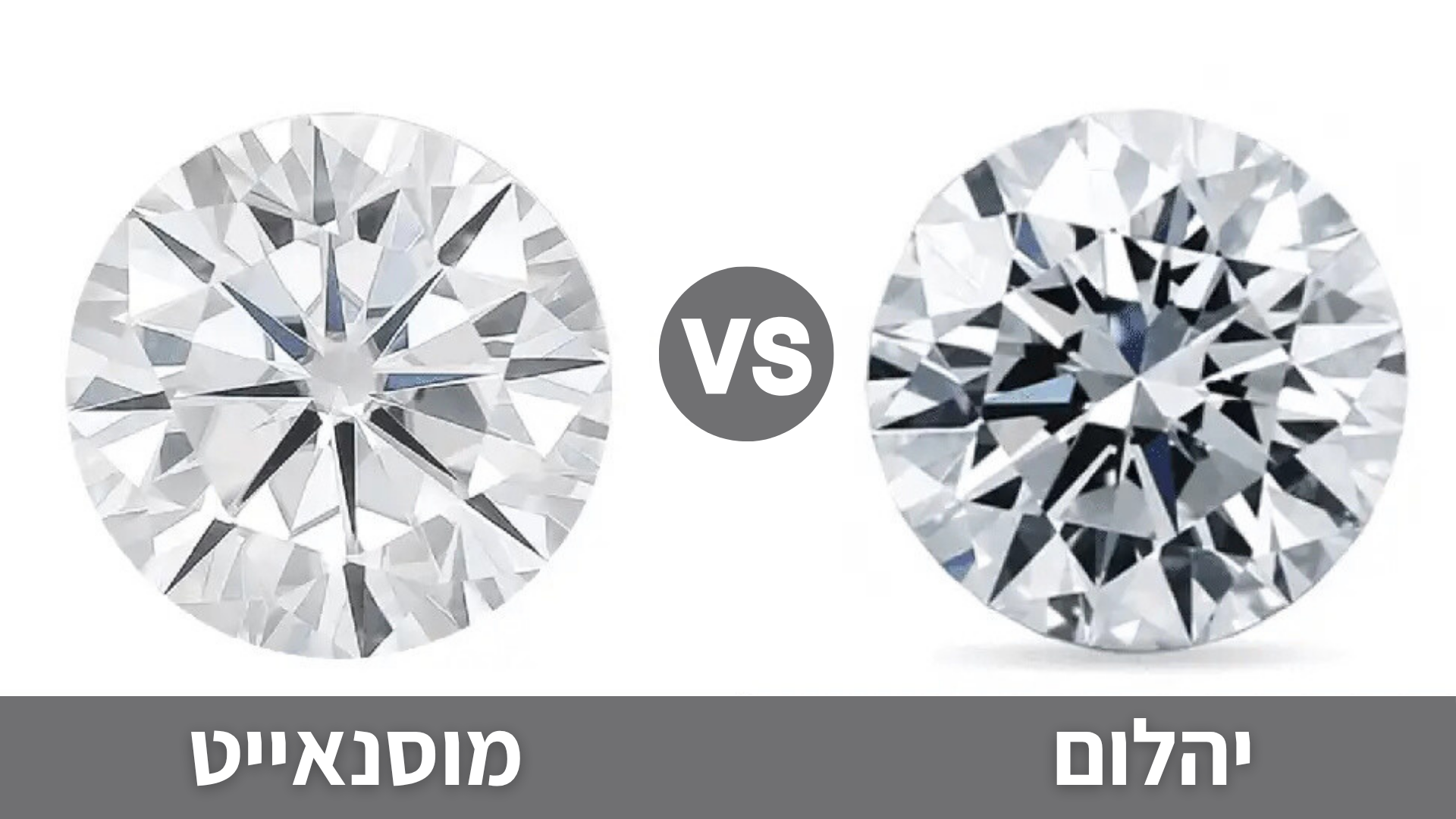
Moissanite vs. Diamond
What is Moissanite, actually?
Moissanite is a synthetic gemstone, first discovered in a meteorite over a hundred years ago. Since then, it has been primarily produced in laboratories and has become very popular in jewelry due to its strong brilliance and affordable price.
Its chemical composition is silicon carbide (SiC) – a very hard material capable of dispersing light magnificently. In fact, moissanite has a higher refractive index than even diamond, creating stunning, colorful, and unique rainbow sparkles.
What is a Diamond?
Diamond is the hardest mineral in nature (10 on the Mohs scale), composed of pure carbon. Diamonds form naturally deep within the Earth over millions of years, but today there are also high-quality lab-grown diamonds, which has made the field more accessible.
The brilliance of a diamond is sharp, clear, and white – characterized by a "cleaner," less colorful sparkle than that of moissanite. This is what makes a diamond a luxurious and sought-after stone.
Key Differences Between Moissanite and Diamond
1. Appearance and Sparkle
Moissanite is more brilliant than diamond and "shines" with stunning rainbow sparkles – like a diamond with a "disco effect." This is due to its high refractive index. Its sparkle can appear as small flashes of colored light when light hits it.
In contrast, a diamond gives a white, clean, almost transparent sparkle, with a brilliance that conveys elegance and classicism. Those seeking a more natural and elegant look will often lean towards a diamond.
2. Price
Moissanite is significantly cheaper than diamond. The price differences are immense – in many cases, moissanite can cost a tenth or less of the price of a diamond of similar size and quality. Therefore, it is very appealing to those looking for beautiful and impressive jewelry without paying high amounts.
3. Durability
Diamond is the hardest material in nature, so it is almost impossible to scratch. Moissanite is also very hard, but slightly less so – nevertheless, it is durable enough for everyday use.
4. Origin and Ethics
Moissanite is produced only in a laboratory, so there are no moral or environmental issues associated with its mining. Diamonds can be associated with issues such as unethical mining or "blood diamonds," hence the great importance of certifying their origin. Today, there are synthetic diamonds that avoid these problems, but in the current market situation, moissanite is the more ethical choice.
5. Color and Hue
Moissanite can appear slightly warm or with a slight green or yellow hue in some cases, especially in very large stones. A high-quality diamond is usually completely transparent, without hues – and this is one reason why many prefer it.
When to choose Moissanite and when to choose Diamond?
-
If a sparkling, brilliant look with "disco sparkles" and an affordable price are important to you – moissanite is an excellent choice.
-
If you want the symbolic status, the natural and clean brilliance, and the feeling of a precious natural stone – diamond is your choice.
-
If you are concerned about environmental and ethical impact, and want clean and eco-friendly jewelry – moissanite wins.
Detailed Buying Guide: Moissanite vs. Diamond
1. Understanding Your Needs and Budget
First of all, it's important to define what matters to you:
-
Are you looking for an affordable yet sparkling piece of jewelry?
-
Is it important to you that it's a natural stone with symbolic value?
-
Is environmental ethics important?
-
What is your budget?
Based on the answers, you can determine whether moissanite or diamond will be more suitable.
2. Identification and Quality
Identifying Moissanite
-
Brilliance and Color: Moissanite is very brilliant, sometimes appearing with strong color sparkles (rainbow).
-
Weight: Moissanite is lighter than a diamond of the same size, so a piece of jewelry with moissanite will feel lighter.
-
Professional Testing: To be sure it's moissanite, it's advisable to check at an accredited laboratory or with a jewelry expert.
Identifying a Diamond
-
Brilliance: A clean, white sparkle, without a colorful rainbow effect.
-
Weight: A diamond will be heavier for the same size.
-
Gemologist Check: A real diamond will come with a quality certificate from a recognized gemological center like GIA or IGI.
-
Tests: Special testing devices can be used, for example, thermal conductivity testing, a "Diamond Tester" device – a professional tool that distinguishes between diamond and moissanite.
3. Moissanite and Diamond Quality
Moissanite Quality
-
There are differences in moissanite quality – it's important to choose moissanite with precise cutting and high clarity without flaws.
-
High-quality moissanite will be transparent, without clouds or flaws, and with intense sparkle.
Diamond Quality
-
Diamond quality is determined by the "4Cs": Cut, Color, Clarity, Carat.
-
A gemological certificate is essential when buying a diamond to verify its quality and origin.
4. Buying from a Reliable Source
-
Buy jewelry only from established, reputable, and recommended stores.
-
Ensure that a certificate or proof of the stone's quality can be provided.
-
Ask about return options and authenticity guarantees.
5. Preliminary Tests You Can Do Yourself
-
Viewing Test: Take the stone under different light (sunlight, artificial white light) and try to notice rainbow sparkles ("disco effect") – a characteristic sign of moissanite.
-
Weight Test: If you have an accurate scale, you can check that the weight matches the size of the stone according to online tables.
-
Light Stacking Test: A diamond will return sharp white light, while moissanite will sometimes return light in different colors.
6. Maintenance and Care
-
Moissanite and diamond are very durable, but both should be cleaned at a jeweler's or with warm water and mild soap.
-
Avoid direct impacts, like any hard gemstone – both moissanite and diamond can break from a strong blow.
7. Questions for the Seller
When you meet a seller, ask:
-
Is the stone natural or synthetic?
-
Is there a gemological certificate?
-
What is the return policy?
-
Is there a warranty on the jewelry?
-
🎨 Moissanite Color
The moissanite we provide comes in a "D-Color" shade – the highest grading on the international gemstone color scale.
-
💎 D-Color means a stone that is completely colorless, white, cold, and clear.
-
This is the closest shade to the appearance of a natural diamond of the highest quality.
-
The stones are carefully selected to ensure no yellowish or greenish hues appear – which sometimes occurs in lower quality or very large moissanite.
In simple terms: Your stone looks like a luxurious diamond, but at a more accessible price.
🔍 Clarity Grade
Our moissanite is graded VVS (Very Very Slightly Included) – one of the highest clarity grades available.
-
✔️ The stone is eye-clean, with no flaws or spots discernible without professional equipment.
-
✔️ Each stone is inspected to ensure it is brilliant, sharp, and visually perfect.
-
✔️ This level of clarity allows for maximum brilliance and light return – highlighting the unique sparkle of moissanite.
-
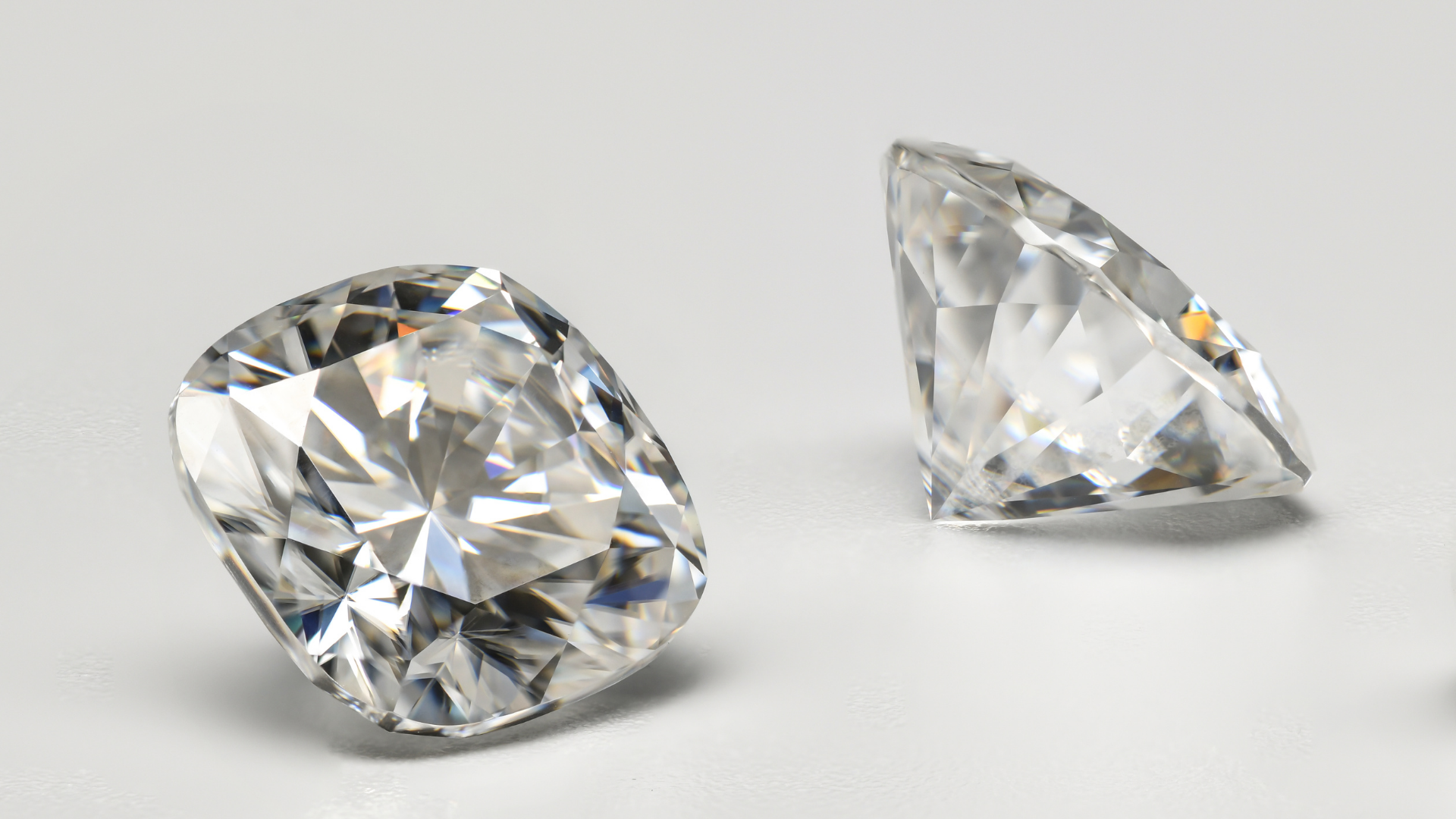
Moissanite vs. Diamond:
Two precious and sparkling stones, yet completely different – diamond is natural and rare, with maximum hardness and a delicate brilliance. Moissanite is a very durable synthetic stone, more radiant than a diamond and reflects light in colors – which gives it a more dazzling and prominent appearance, at a significantly lower price.
